
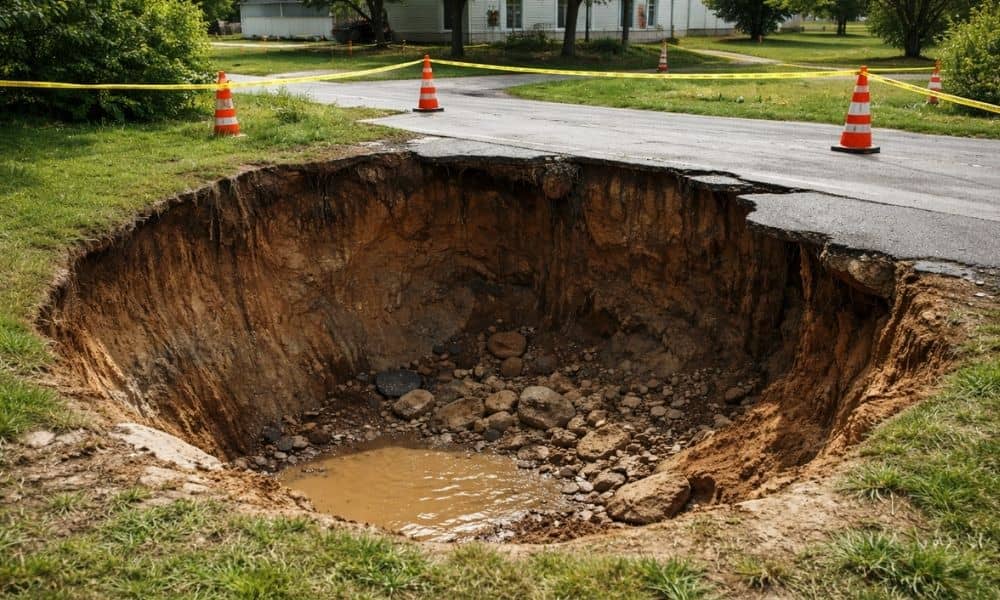
According to the U.S. Geological Survey (USGS), a sinkhole is a depression or hole in the ground caused by the collapse of the surface layer, typically resulting from the dissolution of soluble rocks such as limestone, gypsum, or salt beneath the ground. These features are common in karst landscapes, where groundwater gradually erodes the underlying rock, creating underground voids that can eventually give way. Sinkholes may form slowly over time or appear suddenly, often triggered by heavy rainfall, drought, or changes in groundwater levels. Dealing with sinkholes depends on their size and severity: small, stable sinkholes may be filled with compacted soil or grout, while larger or active ones require geotechnical investigation to assess subsurface conditions before stabilization and repair. Proper site investigation, drainage control, and soil testing are essential preventative measures in areas prone to sinkhole activity.