
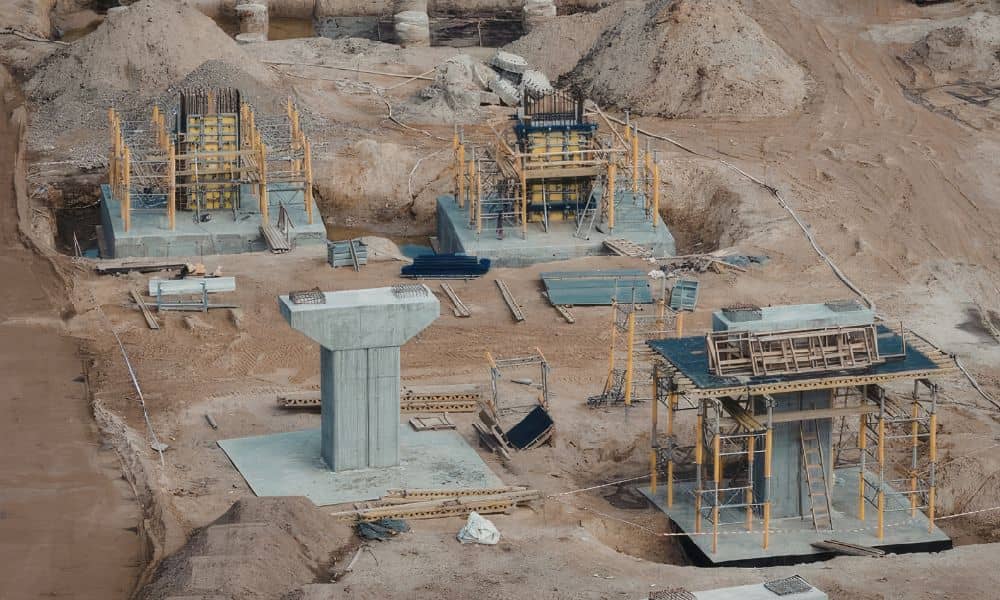
In engineering, a foundation is the structural element that connects a building or structure to the ground or, in some cases, to water, such as floating structures transferring loads safely from the structure to the supporting soil or rock. Foundations are generally classified as either shallow or deep. Foundation engineering involves the application of soil mechanics and rock mechanics (geotechnical engineering) in the design of foundation elements.
Foundations provide structural stability by:
1. Distributing the weight of the structure over a large area to prevent overloading of the underlying soil and avoid unequal settlement.
2. Anchoring the structure against natural forces such as earthquakes, floods, frost heave, tornadoes, wind, and other environmental actions.
3. Providing a level and stable surface for construction.
4. Anchoring the structure firmly into the ground to enhance stability and reduce the risk of failure.
5. Preventing lateral movement of the supported structure where necessary.
These functions highlight the fundamental role foundations play in ensuring structural safety and long-term performance (Wikipedia).